
Why Meditation for Seniors Is Especially Powerful for Older Adults
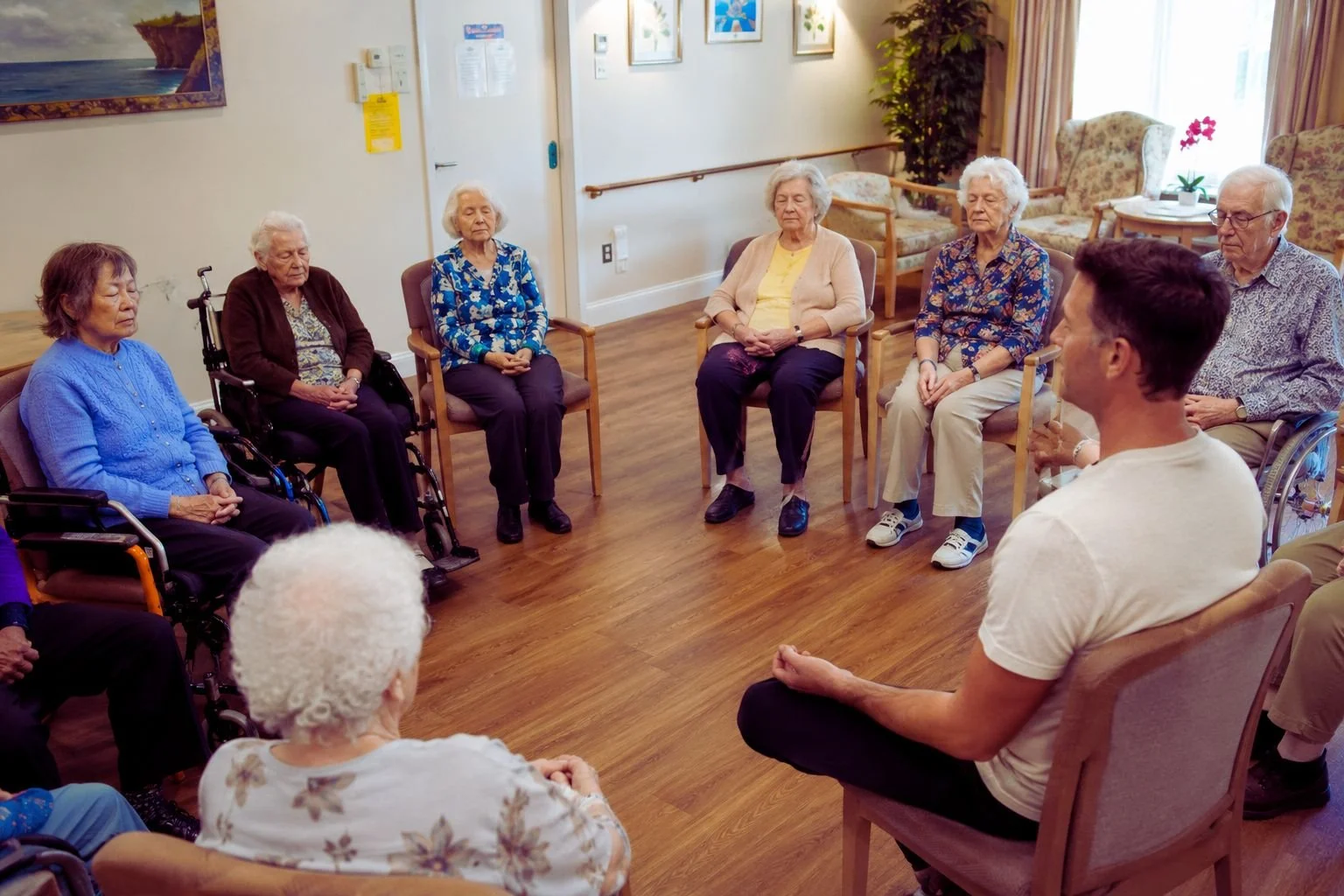
Growing older brings perspective, resilience and a lifetime of experience. It can also bring significant change. Retirement, reduced mobility, the loss of loved ones, health concerns and a move into residential care can all affect a person’s sense of stability and independence.
Meditation offers older adults something valuable within that changing landscape: a simple way to reconnect with the present moment. It requires no expensive equipment, high level of fitness or previous experience. It can be practised in a chair, in bed or in a group, making it an unusually adaptable addition to an aged care lifestyle program.
The key is to deliver it thoughtfully. Meditation for seniors should be short, welcoming and responsive to the people in the room. When those foundations are in place, a few quiet minutes can become a genuinely meaningful part of a resident’s week.
What Does Meditation for Older Adults Look Like?
Meditation is often presented as sitting cross-legged in perfect silence. That image excludes many of the people who could benefit from it most.
In an aged care setting, meditation may be as simple as:
noticing the feeling of the feet resting on the floor
listening to a calming piece of music
following a gentle guided meditation for seniors
paying attention to the natural breath without changing it
recalling a person, place or memory that brings comfort
sharing one thing that feels meaningful or appreciated today
Residents do not need to empty their minds, sit on the floor or close their eyes. They may participate from an armchair, wheelchair or bed. Some will follow every instruction; others may simply enjoy the calm atmosphere.
This flexibility matters. Effective mindfulness for aged care residents and mindfulness exercises for nursing homes meet people where they are, rather than expecting them to adapt to a rigid technique.
The Benefits of Meditation for the Elderly
Meditation should never replace medical or psychological care. Research nevertheless suggests it may support several areas affecting quality of life in later years.
The US National Center for Complementary and Integrative Health reports that meditation has been studied in relation to anxiety, stress, depression, pain and sleep. It also cautions that the strength of the evidence varies. That balanced view is useful for aged care teams: meditation is best treated as a supportive wellbeing practice rather than a medical promise.
1. Meditation for Anxiety in Older Adults
Anxiety in later life may appear as restlessness, repeated questions, difficulty settling, irritability or worry about health, family and unfamiliar routines.
Meditation can create a pause between a worrying thought and the reaction that follows. A calm voice, a steady sensory focus and permission to take one moment at a time can make concerns feel less overwhelming.
If breath awareness feels uncomfortable, use an external anchor. A bell, the support of the chair or the texture of a soft object can provide a present-moment focus without pressure on the breath.
2. How Meditation Helps Seniors Sleep
Pain, medication, reduced activity, worry and changing routines may fragment sleep. Meditation cannot resolve every cause, but it can help prepare the mind and body for rest.
Mindfulness practices may reduce the mental replay that often appears at bedtime. A slow body scan, calming imagery or a few minutes of guided relaxation can give attention somewhere gentle to settle. A randomised clinical trial involving older adults with sleep disturbances found that a mindfulness program improved sleep quality and related daytime difficulties compared with sleep education.
Consistency is often more useful than length. A familiar five-minute recording after evening care may be easier to sustain than an occasional 30-minute session. Its words, pace and music can become cues that the active part of the day is ending.
3. A Gentler Relationship With Pain and Discomfort
Meditation should never dismiss pain or delay assessment. It may, however, help a person relate to discomfort with less tension. Invite residents to notice areas that feel supported, comfortable or neutral rather than directing intense attention towards pain. No one should be told they can “think away” a medical problem.
Choice is important. Residents should be free to change position, open their eyes, stop the exercise or seek assistance at any time.
4. Connection, Meaning and Reduced Loneliness
Group meditation can create a shared sense of calm and belonging. Residents gather for a common purpose, hear one another’s reflections and experience stillness in company.
An Australian qualitative study of a six-week mindfulness meditation group in residential aged care identified four themes in residents’ experiences: meaningful connection and sharing, a supportive reflective space, mindfulness practice, and gratitude.
The conversation before and after meditation can be just as important as the quiet practice. A question such as “What brought you comfort today?” may invite memories, humour and genuine interaction.
5. Attention, Memory and Mental Engagement
Meditation gently exercises attention. Returning to a sound, sensation or phrase after the mind wanders practises the skill of refocusing.
Early research into meditation for dementia and memory is promising, but it should be described accurately. A 2025 systematic review and meta-analysis of meditation for subjective cognitive decline, mild cognitive impairment and Alzheimer’s disease reported possible improvements in global cognition, sleep and aspects of health. The researchers also highlighted small samples, variation between studies and the need for larger, longer trials.
Meditation may support attention, wellbeing and engagement, but facilities should not promote it as a treatment that prevents or reverses dementia.
6. A Renewed Sense of Choice and Independence
Meditation offers a meaningful area of agency. A resident can choose whether to join, where to focus, whether to close their eyes and which practice feels comfortable.
This fits naturally with person-centred care. Australian guidance on daily living and quality of life emphasises meaningful activities, individual preferences, independence, social connection and residents’ strengths.
Let residents help shape the program by choosing music, timing and practices such as stories, gratitude, nature imagery or quiet reflection.
Meditation for Seniors With Limited Mobility
Movement is optional. Meditation for seniors with limited mobility can be practised without changing seats or performing complicated exercises.
Chair Meditation for Elderly Residents
A simple chair meditation may include the following steps:
Invite the resident to find a position that feels supported. Avoid insisting on a straight or rigid posture.
Offer the choice of keeping the eyes open, softly lowered or closed.
Begin with contact points: feet on the floor, hands on the lap and the back supported by the chair.
Guide attention to natural breathing. Avoid deep breaths or breath holds unless they are appropriate for the individual.
Introduce one clear focus, such as a calming word, gentle music or a pleasant image.
Finish by noticing the room and moving the hands or feet in any comfortable way.
Older adults with hearing loss or slower processing may need more time between cues. A microphone can help, but clarity matters more than volume: use short sentences, a steady pace and one instruction at a time.
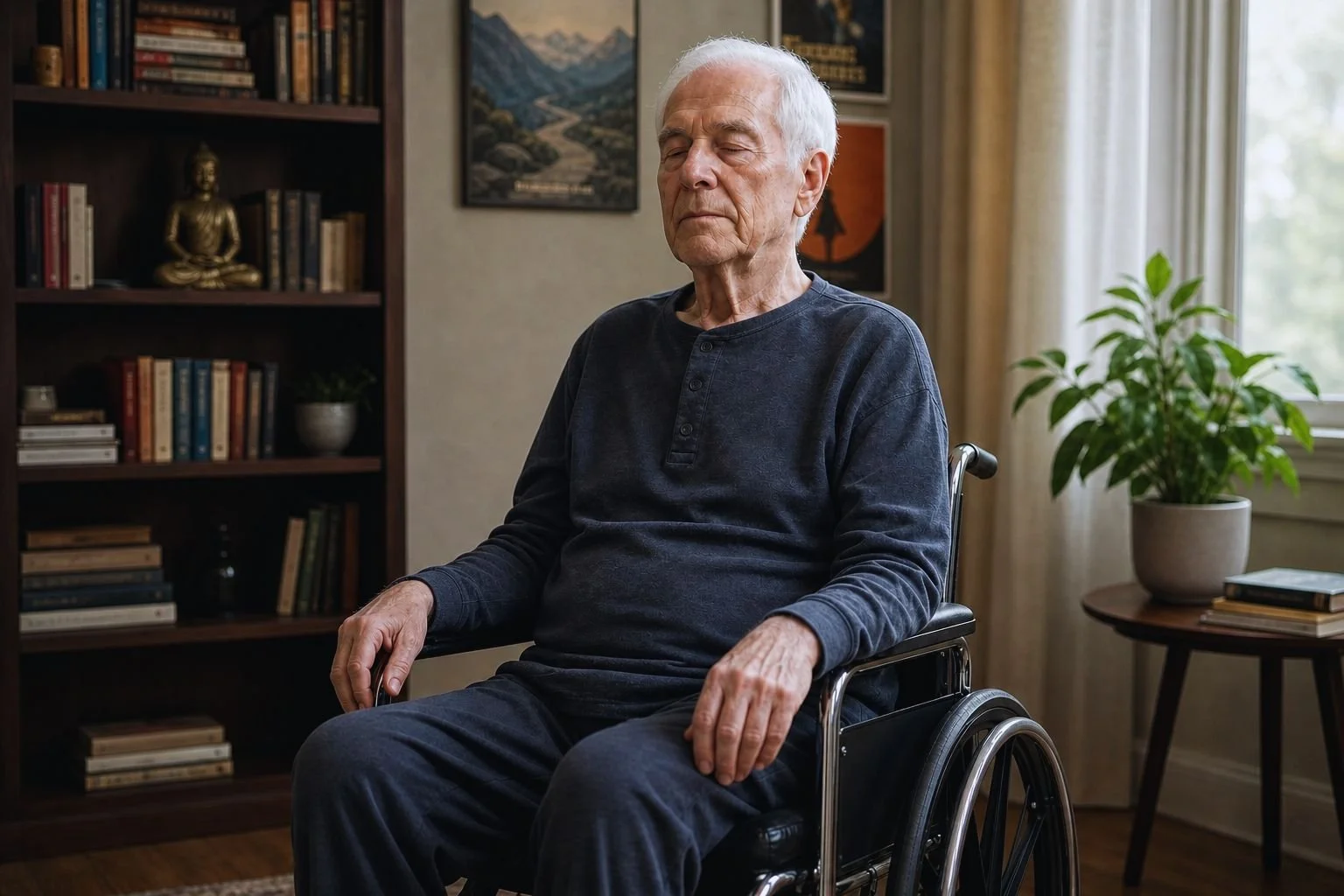
Meditation for Dementia and Memory: Adapting the Practice
For a person living with dementia, long silence or abstract instructions can be confusing. Successful sessions tend to be sensory, reassuring and familiar.
Useful adaptations include:
keeping the practice between three and ten minutes
repeating the same simple phrases
using familiar music, nature sounds or treasured objects
replacing abstract language with concrete cues such as “feel your hands resting”
avoiding memory tests or asking residents to explain the technique afterwards
welcoming movement, talking and open eyes
holding sessions at a time when residents are usually most settled
Dementia Australia’s activity guidance includes mindfulness with music, belly breathing and body scans. Its broader message is equally important: activities should suit the individual.
If a resident becomes distressed, disoriented or unusually withdrawn, stop the practice and respond according to the person’s care plan. Meditation should feel like an invitation, never a test of compliance.
Best Meditation Techniques for the Elderly
Different residents will respond to different approaches. A varied program might rotate among these accessible techniques:
Guided sensory meditation
Notice three sounds, the air temperature and the support beneath the body. This concrete focus works well for beginners.
Brief body scan
Move through comfortable or neutral areas, allowing residents to skip any part.
Gratitude and loving-kindness
Recall something appreciated or use simple phrases of goodwill for oneself and others. Optional sharing can build connection.
Music-based mindfulness
Notice the rhythm, instruments or emotional tone of a familiar piece. Music makes mindfulness approachable to many beginners.
How to Build Mindfulness Programs for Aged Care Facilities
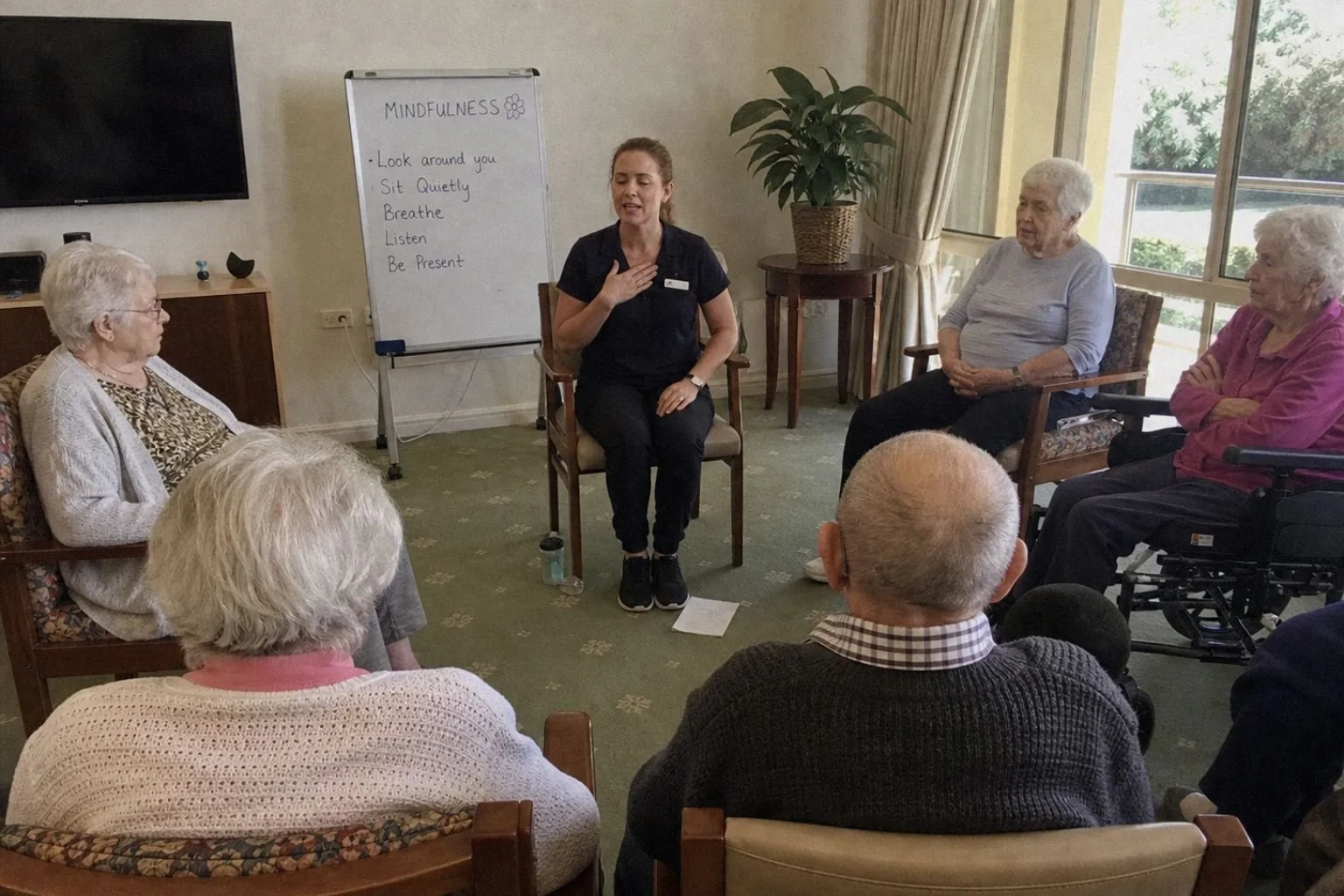
The strongest mindfulness programs for aged care facilities are designed around the residents, not copied from a studio class. Consider the following framework.
1. Start with resident preferences
Ask what calm means to residents. Offer choices such as nature imagery or familiar music, and keep participation voluntary.
2. Make the first session short
Begin with 10 to 15 minutes. Residents should finish comfortable rather than fatigued.
3. Reduce avoidable barriers
Use a quiet room and supportive seating. Check hearing, vision, temperature and toileting needs first.
4. Use a predictable structure
Repeat the same sequence: welcome, grounding, guided practice, reorientation and optional sharing.
5. Keep the language inclusive
Use plain language and respect personal beliefs. Learn about Enso Meditation’s practical approach.
6. Brief the facilitator properly
Share accessibility needs while protecting privacy. Check their understanding of dementia, mobility, trauma-aware choice and distress responses.
7. Review residents’ experience
Look beyond stillness to return attendance, comments, social interaction and improved settling.
A Sample 20-Minute Aged Care Meditation Session
Three minutes: Welcome residents, explain the practice and reinforce choice.
Four minutes: Notice the chair, feet, hands and sounds in the room.
Seven minutes: Guide one accessible technique, such as sensory awareness or gratitude.
Two minutes: Reorient slowly to the room.
Four minutes: Invite optional reflections and social conversation.
Shorten the format when energy or concentration is lower. Residents who listen without following every cue are still participating.
Choosing Meditation for Aged Care Facilities
When comparing wellness programs for aged care residents, ask prospective facilitators:
How do you adapt sessions for mobility, hearing and cognitive differences?
Can residents keep their eyes open and leave at any time?
How do you make sessions appropriate for people living with dementia?
What do you do if a participant becomes uncomfortable or distressed?
Can you tailor the content to resident interests, culture and feedback?
Do you offer a trial session or a flexible ongoing program?
A good provider will welcome these questions and explain the program without exaggerated health claims. Explore Enso’s frequently asked questions and participant testimonials.
Bringing More Calm and Connection Into Aged Care
The real value of meditation for older adults often appears in modest moments: a resident settling into their chair, a room becoming quieter, a treasured memory surfacing or two people sharing what made them smile.
When it is accessible, person-centred and delivered with care, meditation can add calm, choice and connection to the rhythm of aged care. It gives residents an activity they can continue even when mobility is limited, and it gives staff another gentle way to support emotional wellbeing.
Enso Meditation offers tailored meditation workshops for aged care homes, with practical sessions designed around residents’ abilities, preferences and experience levels.
Would you like to explore a one-off workshop or an ongoing program for your residents? Contact us for a friendly chat about what would suit your facility.