
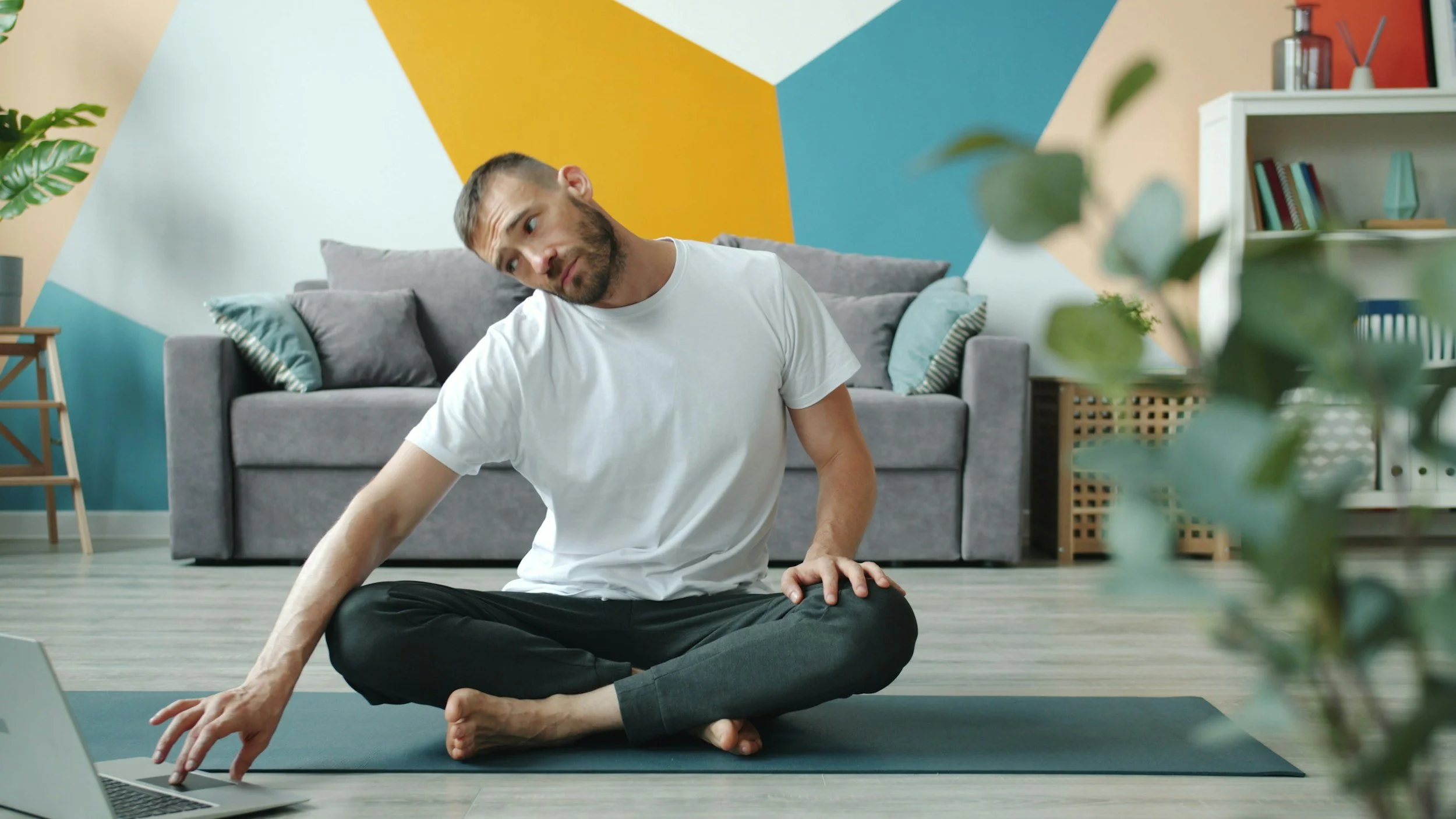
It's 2:30 in the afternoon. Your inbox is full, your next meeting starts in four minutes, and you've just realised you've read the same sentence three times.
Someone tells you to try meditating.
It can sound a little unhelpful, can't it? Your workload won't shrink because you sat still for ten minutes. So is a short meditation actually worth your time, or is it just one more thing on the to-do list?
There's some good evidence on this, and the answer is encouraging, with a few honest caveats.
What the Research Found
A large randomised clinical trial published in JAMA Network Open in 2025 followed 1,458 employees at a large academic medical centre. All of them were volunteers who reported mild to moderate stress.
Half were asked to use a digital meditation program for 10 minutes a day over eight weeks. The other half carried on as usual, without adding meditation.
After eight weeks, the meditation group reported lower stress than the other group. They also did better on job strain, burnout, work engagement, anxiety and depression. Better still, the improvements largely held at four months.
One finding stands out for anyone with a busy day. People who averaged 5 to 9.9 minutes a day saw a greater drop in stress than those who averaged under five. You didn't need to reach a perfect ten minutes to see a difference, but showing up for more than a few minutes seemed to matter.
What the Research Doesn't Tell Us
Meditation isn't a magic fix, and it's worth being clear about the limits of this study.
Everyone in it volunteered, so they may have been more open to meditation than the average person. They also worked at one medical centre, and the results came from an app rather than a live session with a teacher. The authors say more work is needed to understand why work-related wellbeing improved.
So this study doesn't prove that meditation will work for everyone. It does suggest that a small daily habit may be a practical way to ease stress.
Why Could Ten Minutes Make a Difference?
Stress often pulls our attention in two directions: back to the conversation that went badly, and forward to everything that might go wrong.
Meditation trains something simple. You notice where your attention has gone, then gently bring it back. You'll do this again and again, and that's the practice, not a sign you're doing it wrong.
Over time, many people find they catch themselves sooner. You still get the difficult email. You may just have a little more room to take a breath before you answer it.
A Simple 10-Minute Meditation to Try at Work
You don't need a cushion, a special app or a quiet mountain top. A chair and a door that closes will do. Even a
Settle (1 minute). Sit comfortably with your feet on the floor. Close your eyes, or rest your gaze on a spot in front of you.
Breathe (1 minute). Take three slow breaths, letting each exhale be a little longer than the inhale. Then let your breathing return to normal.
Focus (6 minutes). Rest your attention on the feeling of your breath, wherever you notice it most. When your mind wanders, and it will, notice it and come back. No judgement required.
Widen (1 minute). Let your attention take in the whole body, and the sounds in the room.
Choose (1 minute). Before you open your eyes, ask yourself: what's the one thing that matters next?
Ten minutes not possible today? Do five. A shorter practice you actually do beats a longer one you keep putting off.
Making It Stick
Habits tend to last when they're attached to something you already do. Try one of these:
Before you open your laptop in the morning
Straight after lunch, before that 2:30 slump arrives
In the car, before you walk into the house
Then give it a few weeks. The people in this study were asked to practise for eight, so don't judge it on day two. Our free meditation progress chart can help you keep track.
If You Look After a Team
Since 1 December 2025, Victorian employers have been required to identify and control psychosocial hazards at work, such as those that contribute to work-related stress.
Meditation doesn't replace that work. If a team is stretched too thin, the answer starts with the workload, not a breathing exercise.
Alongside those changes, though, giving people practical tools can be a real act of care. It tells your team that their wellbeing matters, and it gives them something they can use the next time pressure builds.
Small Moments Add Up
Every meditation practice starts the same way: with one sit, on an ordinary day.
You don't have to clear your mind or transform your life. Just take ten minutes, notice your breath, and come back when you drift.
And if stress is starting to feel like too much, please speak to your GP or a mental health professional. If you need support right now, Lifeline is available 24 hours a day on 13 11 14.
Want to bring this to your workplace? We run practical, down-to-earth meditation sessions for teams, in person across Melbourne and online. Contact us for a chat. We'd love to hear from you.parked car works.x